By Mungo Campbell
Introduction
Last year I wrote an article titled: “Who is the goat of formula 1?”. In it I discussed five Formula 1 drivers many consider to hold the status of being the best to ever step behind the wheel of a car. So I found it natural to talk about the best car ever made. Unlike that article, I will only be talking about one car. So what is the greatest car ever constructed? Many will argue it is the Ford GT40, that struck down Ferrari in Le Mans four times in a row from 1966 to 1969. Some will say that the Ferrari F40 (1987) is the best car ever made; being one of the first true supercars and one of the most undeniably beautiful cars ever made (I say this not as a Ferrari fan but as a Ferrari cynic). It is renowned for its power and turbo charger. However I don’t believe any of this. While up there, the GT40 and F40 are not the best cars ever produced. That honor belongs to McLaren, who with their first attempt at a proper road car made the best car to ever roll off the production line; the McLaren F1 (1992).
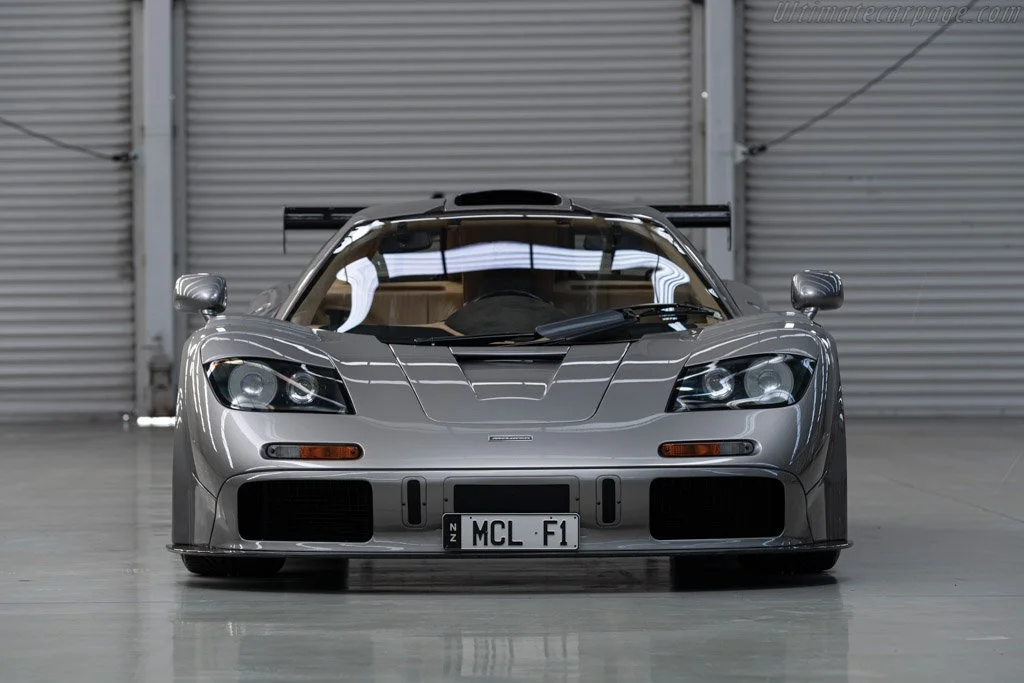
The McLaren F1 (Ultimatecarpage.com)
Engineering and design
The Mclaren F1, contrary to its name, isn’t an F1 car. F1 cars are open wheel, which means that, the wheels stick out from the chassis, compared to their closed wheel counterparts that have their wheels encased in wheel wells.They are also designed based on a set of regulations set by the FIA (Fédération Internationale de l'Automobile), the governing body of most professional racing. The McLaren F1 wasn’t built to these standards, rather it was designed based on the lessons learned by McLaren from its success in Formula 1.
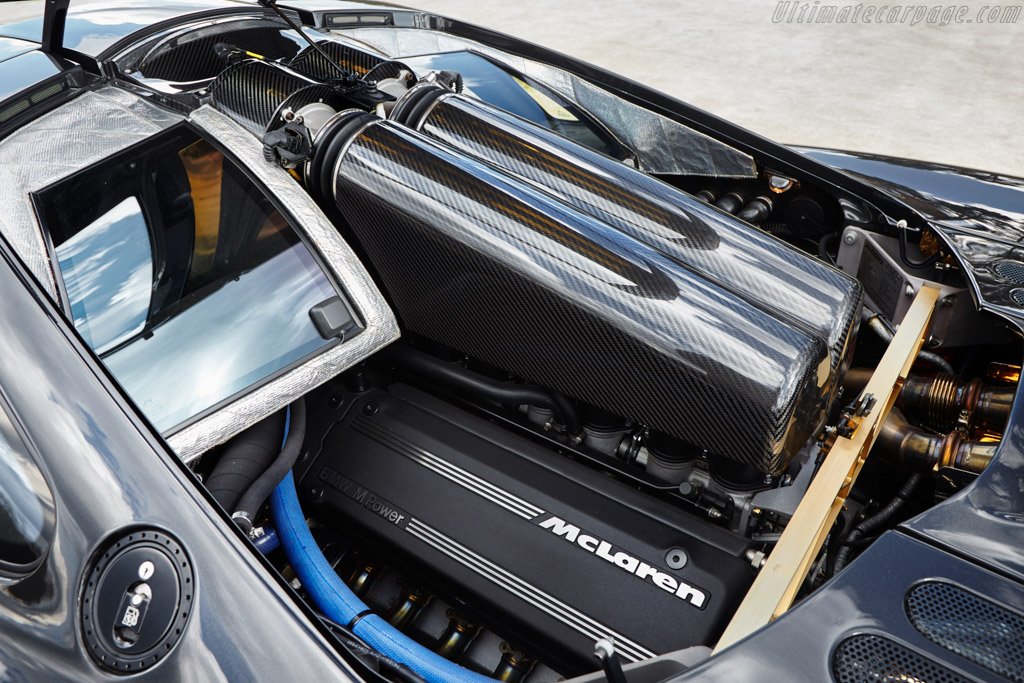
The BMW S70/2 The engine that powered the McLaren F1 (Ultimatecarpage.com)
Let’s start with the heart of the car, the engine. Many supercars opt to fit a turbocharger to increase power. For all who don’t know a turbocharger uses the exhaust gas of a car to spin a turbine, this turbine is used to push more air through the engine and thus, increase power. However, this wasn’t the case with the McLaren F1. The designer opted to keep the engine naturally aspirated meaning, the engine relied solely on the air flowing into the vents to provide power instead of using a turbocharger or supercharger to boost airflow. This made the car more reliable and the driver would have more control over the engine. Something that the Ferrari F40 doesn’t have as its turbocharger can kick in at varying revs, giving the driver less control. This problem is a staple of the Ferrari F40; the turbine of a turbocharger doesn’t spin up immediately; a car needs a certain amount of revs for the turbo to produce power for the engine. was especially unreliable in the F40. The extra power could kick in at a wide range of revs, making it an unpredictable car. Despite the power sacrificed by the engine in pursuit of control and reliability we will see that the F1 can be described as anything but a slow car. The engine that ended up being used in the McLaren F1 was the BMW S70/2. It is a V12 that produces 618 horsepower, weighs 266kg, and has a heat shield to keep the driver from being air-fried in the carbon fiber body; gold was chosen for the heat shield because despite poor thermal insulation, it is fantastic at reflecting infrared heat. The engineers at McLaren received an engine from BMW that was 14% more powerful than requested and only 16kg heavier while using the same engine block. The body of the car is one of the first examples of a car being made of carbon fiber reinforced polymer and demonstrates McLaren’s tactic of utilizing material science to make a car faster. being very lightweight and sturdy; giving the driver a lightweight and controllable body. This is similar to how McLaren used phase changing materials to manage tire temperature and degradation, and dominate the 2025 Formula 1 season. On a side note, phase changing materials are materials that can absorb incredible amounts of heat while remaining stable in a stable state. This makes them great for getting rid of heat which is exactly how McLaren used them to keep the brakes and tires cool during the 2025 Formula 1 season. Having a naturally aspirated engine made airflow to the engine an incredibly important part of the car’s design as there was no assist to help funnel more air into the engine. The car has an air intake on its roof, and an intake under each door to cool the electronics and oil. Along with a very slim, athletic profile, the F1 comes with two small fans aimed at the road. This makes a lower pressure zone beneath the car compared to the high pressure air flowing above the car. This provides more downforce, giving the car more grip to make turns at higher speed or tighter turns with less braking. The McLaren F1 could do straights at 386km/h (240mph) 30 years ago; A record that stood for a decade. This record was broken by the Dauer 962 Le Mans, a car specifically designed to win at Le Mans. The reason why it isn’t better than the F1 is because one is a road car that was made to race, the other was specifically designed to race yet the stats between the two cars are comparable and the 962 didn’t leave nearly as big an impact on the world of motorsports as the F1 did. The F1 still is one of the most powerful and fastest naturally aspirated cars in the world and could compete with all but few modern GT cars.
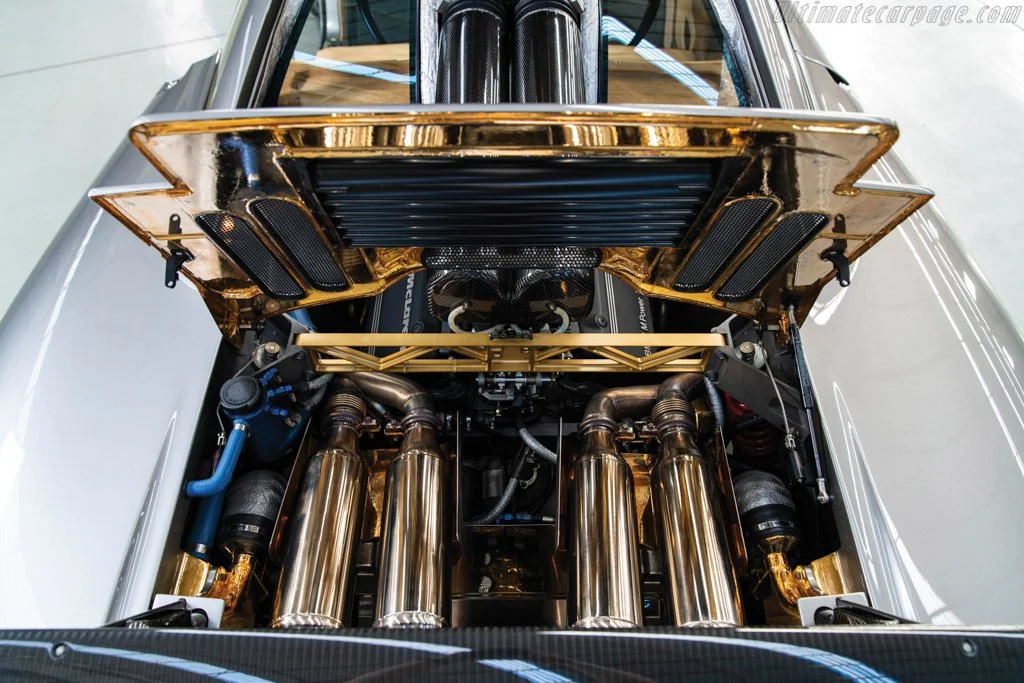
Another angle of the BMW S70/2 (Ultimatecarpage.com)
Formula 1 that the F1 inherited is an aluminum Flywheel that stabilizes the drivetrain (mechanical linkage from the engine and wheels that delivers torque) This provides a more responsive throttle, and makes gear shifts faster and smoother. A flywheel is a spinning wheel inside a car that uses torque from the engine and stabilizes the car (since if something is spinning it’s more stable). It spends this energy by providing power when accelerating. The McLaren F1 was a technological marvel 30 years ago and still punches above its weight class today.
Le mans & History
If you were to only look at the accomplishments of the F1 it wouldn’t look like the best car in the world, in fact it wouldn’t even come close to being the best. The current car Ferrari is using to dominate WEC (World Endurance Championship, the modern day racing series that includes Le Mans) is the 499p and has three consecutive Le Mans wins. Compare this to an old McLaren whose most impressive and famous feat was only one Le Mans win. Le Mans is one of the most prestigious and hardest races in all of motorsports. It has a comparable emotional rollercoaster to the entire Formula 1 season and requires no less skill. You need to be blisteringly fast ona tricky circuit, but also, the three minute lap needs to be repeated for 24 hours. That 24 hours split between 3 people is exhausting, if you make one mistake or zone out for a little too long your race is over and sometimes as much as 20 hours of driving goes down the drain. However, you need to look at the context of that one win as I believe just looking at it as “win at Le Mans” doesn’t do it justice; Here is the context: The F1 wasn’t originally meant to touch Circuit de la Sarthe which is where the 24 Hours of LeMans takes place . It was just designed to be a roadworthy supercar. However in 1995 Le Mans was gaining attention from notable constructors as well as the higher ups at McLaren who wanted a piece of the action. Because of this, a GTR version of the F1 was drawn up in only 4 months to comply with the rules for Le Mans and to actually be competitive (GTR is a version of a road car exclusively designed/ modified to race. Often unnecessary parts like extra seats are removed to save weight). This is what makes the F1's victory arguably one of the most impressive in Le Mans history. To compete in Le Mans the engineers bolted a rear wing to the F1 and stripped the interior. However, the engineers were also required to fashion a restrictor plate to the engine. This was because the BMW S70/2 produced so much power that under Le Mans regulations it was illegal and the air intake needed to be regulated.
To take a car that wasn’t meant to compete in Le Mans, give it bare bones modifications and a restricted engine, and to win on its debut is nothing short of legendary. It is even more insane when you consider the layout of Circuit de la Sarthe, heavily featuring straight line driving. Here, a car’s performance heavily depends on the pure power it can produce. The addition of a restrictor plate was a serious hindrance on the cars performance. Giving the GTR 592 horsepower was a big handicap compared to its true performance over the course of a 24 hour race when over half of the race is straight line driving. Even despite this, with no turbocharger and a restrictor plate, the F1 still set the highest practice top speed up to that point at 281km/h. This was much slower than its road top speed of 386km. The actual race was no less impressive than the win itself. The McLaren F1 GTR was untested over a 24 hour period before the race. To understand how crazy this is, the 24 hours of Le Mans isn’t just about speed, it is about endurance and if your car and your drivers can even make it to the checkered flag. To go out and win Le Mans on your debut, with a car that wasn’t meant to race at Le Mans, was modified to be less powerful with few upgrades over the course of 3 months, and hadn't even undergone 24 hours of testing to see if it could finish the race, is what makes this one win at Le Mans more impressive than Ferrari’s three consecutive Le Mans wins.
Gordon Murry, legacy & conclusion
The last part of the McLaren F1 I wanted to talk about was the designer. The man who designed the F1 was Gordon Murray. That name might not ring a bell to most people but he is a legendary motorsport engineer. After designing the best car ever to set rubber to the road his next move was, naturally, to leave McLaren and create his own line of cars Gordon Murray Automotive. At GMA his philosophy heavily favored fan cars and large engines, straying from hybrid assists, GMA still developed some of the most technologically advanced, fastest, and outright beautiful cars. The most famous example of this is the T.50 Niki Lauda; Named after the 3 time F1 world champion. In conclusion Gordon Murray set out to create McLaren’s first proper road car and ended up making the greatest car to many motorsports fans. These fans include Top Gear Automotive saying “the original F1 GTR was brilliant” and “something that absolutely lives up to the promise of its name”. Murray Walker, who was a legendary motorsport journalist, called it the “greatest car ever” and Lewis Hamilton called the McLaren F1 his childhood dream car, with Ron Denis, the former McLaren F1 team boss promising to give Lewis one if he won 3 world titles. Gordon Murray made a less powerful GTR version that had no 24 hour testing in three months yet still won Le Mans on its debut against all odds. This would set McLaren aside as a proper constructor and not just another Formula 1 team. One of the biggest tragedies is that Bruce McLaren; the founder of McLaren, didn't live long enough to see the completion of the F1 but I’m sure that he would be proud. The F1 made McLaren famous and the team something to be proud of only one year after mourning the death of Ayrton Senna (the greatest driver to ever live who you can read about on The Eastsider). 30 years later it is still one of the fastest cars out there and considered by many to be the best ever made.